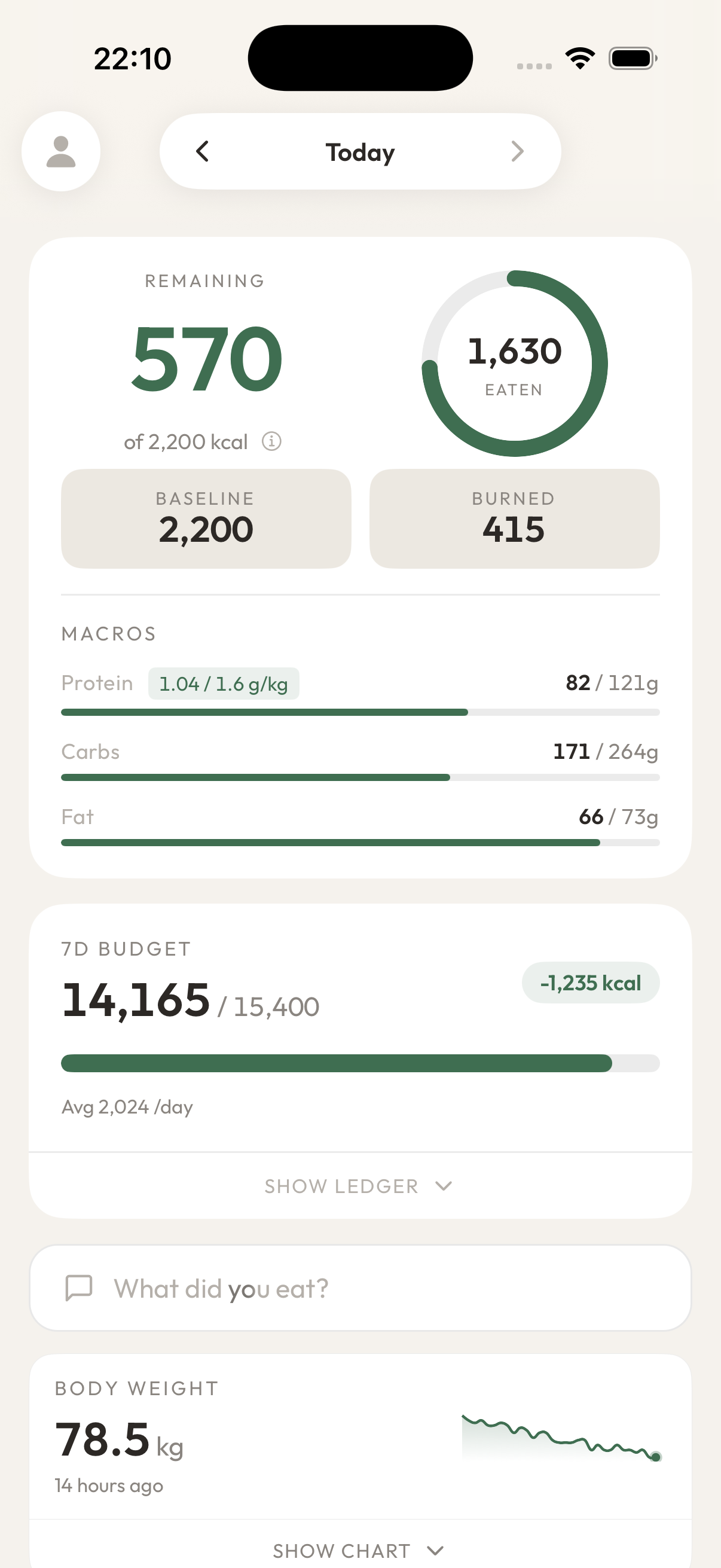
AI calorie tracking: how it actually works
You type “a döner and a can of coke,” and a second later it’s in your log: 640 calories, plus the protein, carbs and fat, nothing searched and nothing weighed. People call that “AI calorie tracking,” which makes it sound like more magic than it is. What actually happened is boring in the best way. A language model read your sentence and did the lookup you used to do by hand.
That’s the whole thing. But it’s worth knowing what runs underneath, because that’s what tells you when to trust the number and when to nudge it.
The old way made you the database
A traditional tracker is a search box bolted to a spreadsheet. To log that same döner you’d search “döner,” scroll past thirty near-identical entries, pick one that’s probably wrong, guess the grams, then do it again for the bread, the sauce, the meat. Five components, five searches, and you’ve spent longer logging dinner than eating it.
The database was never the hard part. You were. The work was translating “a döner with garlic sauce” into weighable, searchable line items, and that translation step is what quietly killed your last three attempts at tracking.
What the model does instead
When you type or say “a döner and a can of coke,” three things happen:
- It reads the sentence like a person. The everyday phrasing, the “ish” portions, the two things in one breath, the brand names. It works out which distinct foods you actually mean.
- It estimates each one. It has effectively read the nutrition facts of a huge range of foods, so it puts calories and macros on each item, scaled to the portion you implied. “A big handful” lands about right without a scale.
- It writes the entry. Straight into your day as structured data, ready to edit if one number looks off.
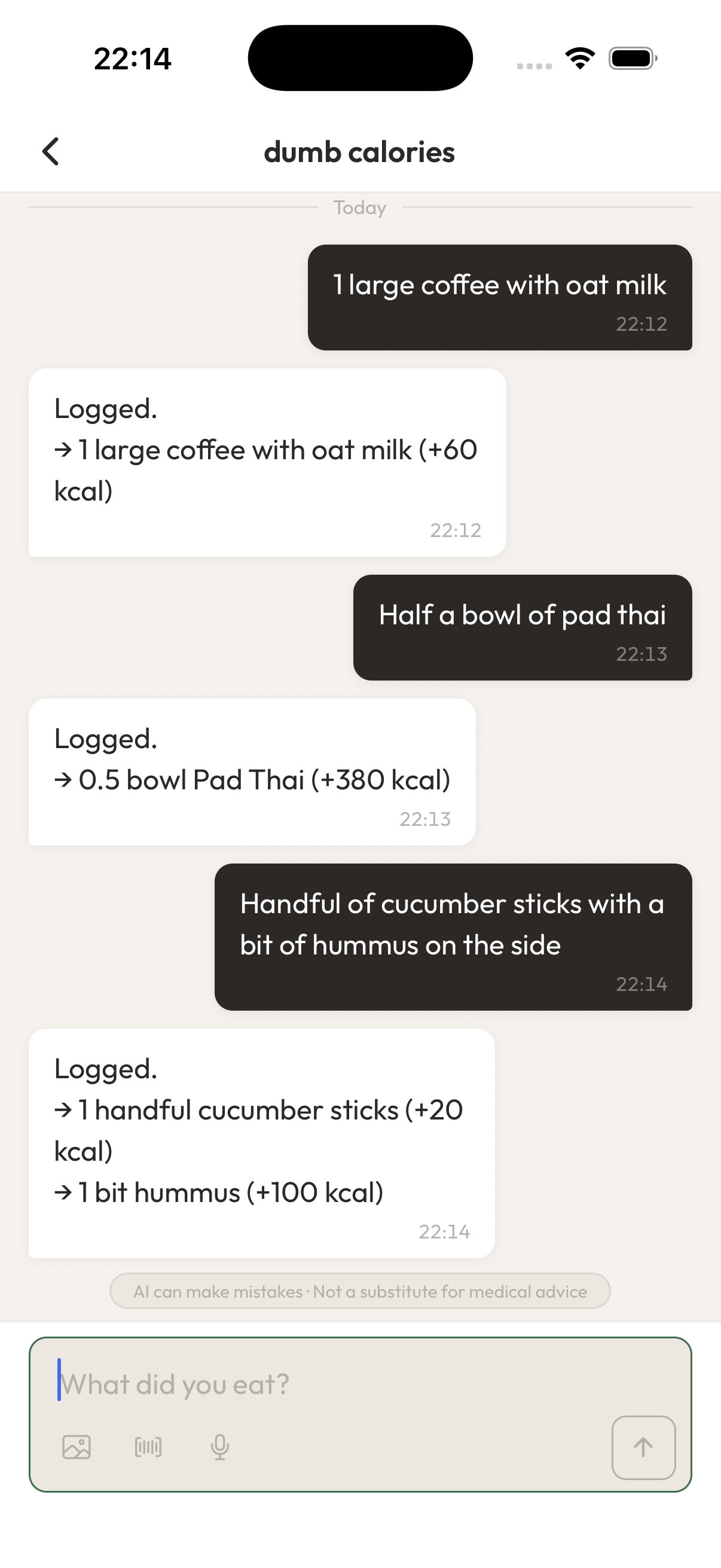
You stopped operating a database and started narrating your day. The arithmetic moved behind the scenes, which is where it belonged the whole time.

get dumb calories
AI-powered food logging by text, voice or photo. log a whole meal in five seconds. on iPhone.
Where the number comes from, and where it wobbles
Fair question: if nobody weighed anything, how good is it? For anything common, a big mac, a chicken breast, a bowl of oats, the estimate sits within a rounding error of the label, because the model has seen those numbers thousands of times. It gets fuzzier exactly where every method gets fuzzy: a restaurant sauce richer than average, a portion way off a normal serving, a home recipe only you know. There it makes a sensible average guess, and you fix it in one tap.
No lab precision is claimed, and you don’t want it anyway. Here’s why the whole worry is beside the point.
“Approximately right” beats “precisely abandoned”
A packaged label is legally allowed to be off by 20%. Your body doesn’t absorb every calorie it’s handed. The “180 grams” of chicken you cooked was never actually measured. Precision in calorie tracking is mostly an illusion you buy with effort, and the price you pay for it is quitting.
So the real question isn’t kitchen scales, it’s whether you’re still logging in three weeks. One sentence per meal, no searching, no weighing, gets you months of steady data, and steady data is the only thing in here that ever changed anyone’s body. If your last attempt wore you down, it was the data entry, not the calories. Hand that part to the model. For the habit side of it, five minutes a day is the one to read next.