How to track calories in five minutes a day
You downloaded a calorie tracker, used it religiously for four days, then hit the wall everyone hits: you ate something that wasn’t in the database, couldn’t face building a custom entry for it, and never opened the app again.
That’s the normal ending, and willpower has nothing to do with it. The thing that beat you was data entry, which is a much easier problem to kill.
Why most tracking is dead by day five
A traditional tracker turns you into a data clerk. You search “chicken breast,” scroll past forty near-identical hits, pick one that’s probably wrong, type the grams. Then again for the rice, the oil, the handful of nuts you almost forgot. One dinner eats three minutes of tapping, and you eat more than one meal a day. Stretch that over a week and tracking has quietly become a second job, unpaid, with no visible payoff. Nobody keeps that up, and nobody should have to.
The fix is less friction, not more willpower.
The five-minute version
The whole method, and it really is this short:
- Say it in plain words. Instead of hunting a database, describe what you ate: “a döner and a coke,” “two eggs and toast with butter,” “big handful of almonds.” Type it, or say it out loud while you’re still chewing.
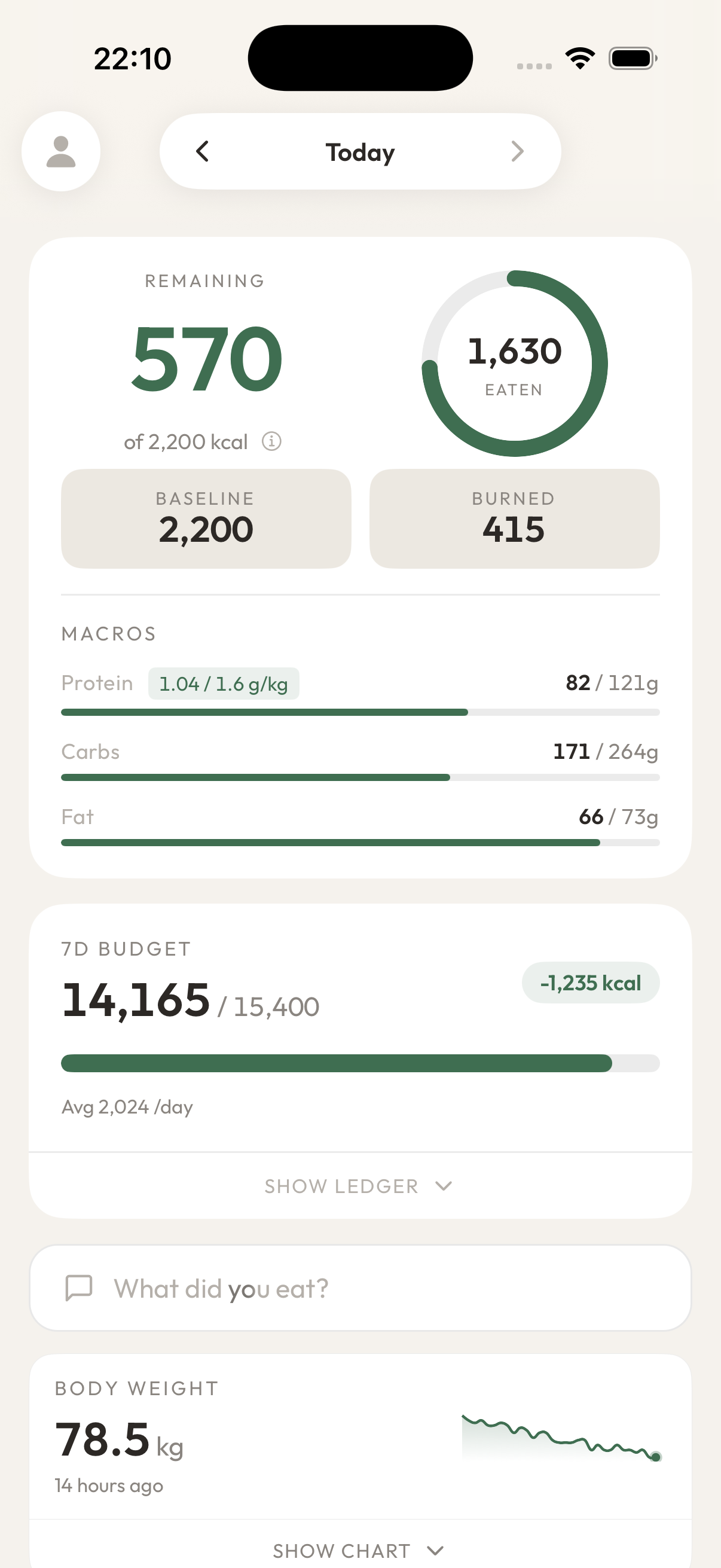
- Let the numbers happen. The app reads the sentence, estimates calories and macros, writes the entry. Nothing to scroll, nothing to weigh.
- Glance, don’t audit. Look at your running total once or twice a day. Stop there.
A full day of meals costs about as much time as sending a few texts, in ten-second bursts you barely notice. It sticks because none of those bursts feels like work.
get dumb calories
AI-powered food logging by text, voice or photo. log a whole meal in five seconds. on iPhone.
“Close enough” is the actual target
Here’s what most apps would rather you didn’t dwell on: precise calorie counting is mostly theatre. A label is legally allowed to be off by 20%. The “150 grams” you eyeballed was probably 190. Your body doesn’t absorb every calorie on the wrapper anyway.
So decimal-point accuracy is effort in the wrong place. What moves the needle is logging every day, even roughly. When the app says a currywurst is about 600 calories, take it as a working number, not a lab result you have to defend.
The best tracker is the one you still open in week three.
Make it a habit, not a project
A few small things separate a tracker you keep from one you bury in a folder:
- Log as you eat, not at midnight. Memory is a confident liar. Ten seconds now beats reconstructing a foggy day later.
- Don’t punish the messy days. Three beers and a late döner? Log it anyway. The entry you want to skip is usually the one you needed.
- Pick one moment to glance. After lunch, before bed, whatever fits. One look at the total nudges the next meal.
Tracking was never supposed to be the hobby. It’s the quiet number that helps you make slightly better calls, day after day. Shrink it from fifty minutes to five and it finally gets to be that.