How to track calories when you're eating out
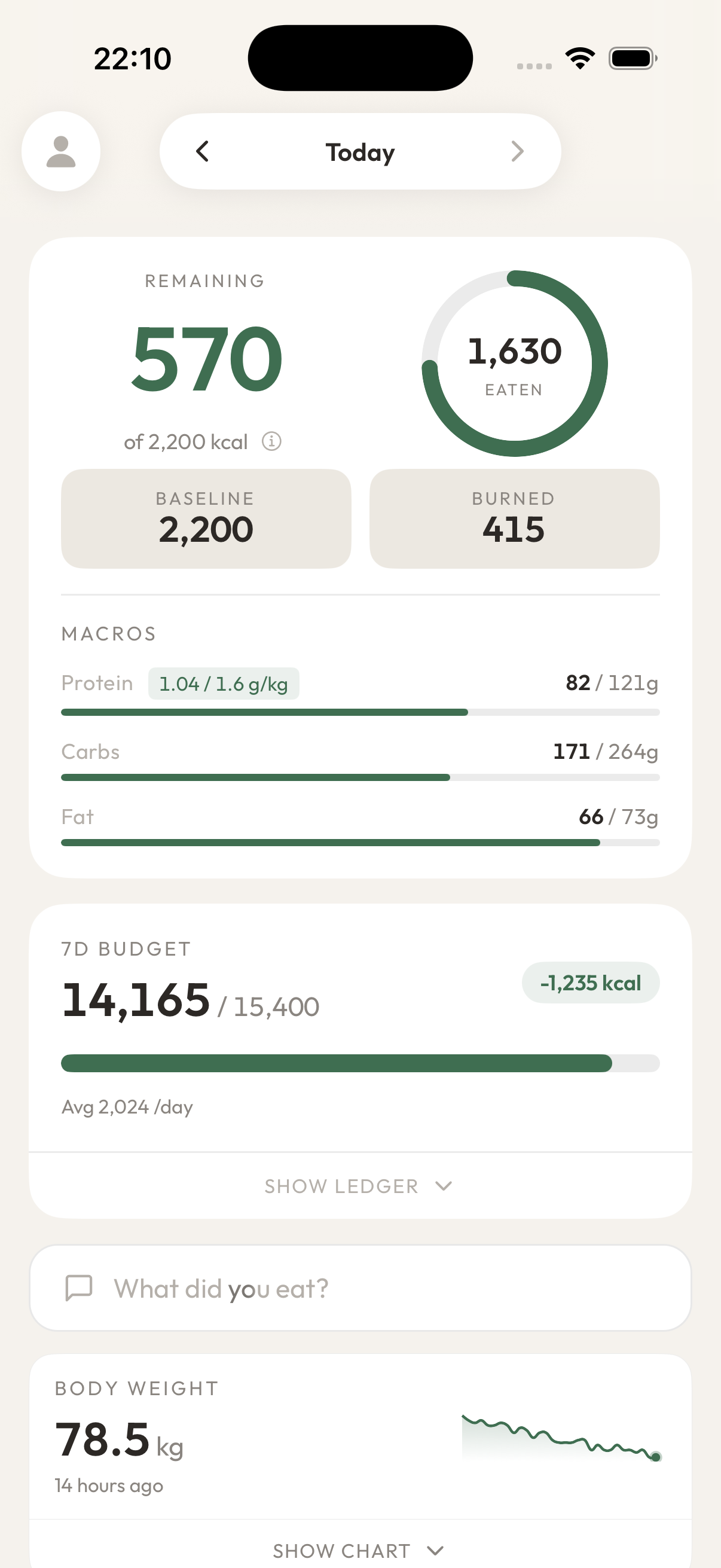
“A döner is 600 calories” is the kind of thing the internet says with a straight face. The real number runs from about 550 to well over 1,000, depending on whether the shop was generous with the meat, the sauce, the bread. Nobody at the counter knows which one they handed you. Neither does the app on your phone. And that gap, between what you ate and what you can actually measure, is where most people’s calorie tracking quietly dies.
It doesn’t die at home. At home you saw the pan; you know roughly what went in. It dies the moment a plate arrives that you didn’t cook: the work lunch, the Friday takeaway, the dinner a friend booked without asking. No label, no scale, no honest way to know whether the sauce was a spoon of oil or half a cup. So people do the reasonable thing and write off the evening. Log nothing, promise to be good tomorrow. Tomorrow quietly becomes the rest of the week.
The standard advice is useless here, because all of it assumes information you will never have.
Why the usual method falls apart at the table
Weigh the portion. Scan the barcode. Look up the exact recipe. Every one of those needs something the restaurant flatly refuses to give you. You can’t weigh a gyros that’s already wrapped. There’s no barcode on a bowl of pasta a kitchen plated by eye. And the “official” menu nutrition, when it exists at all, is a PDF for some standardized portion that has nothing to do with the plate in front of you.
So the choice on offer is bad either way: log nothing and blow a hole in the week, or spend ten minutes doing forensic accounting on a burger. Most people, sensibly, pick nothing.
Describe the plate. That’s the whole method.
There’s a third option the tracking apps of ten years ago couldn’t do: just say what you ate.
“Two slices of margherita pizza and a beer.” “Chicken gyros, fries, garlic sauce.” You type it the way you’d text a friend who asked what you had, and the app reads it the way that friend would: a chicken gyros is meat, bread, salad, sauce, call it 700-ish, then add the fries. Out comes a number to log. No PDF, no detective work.
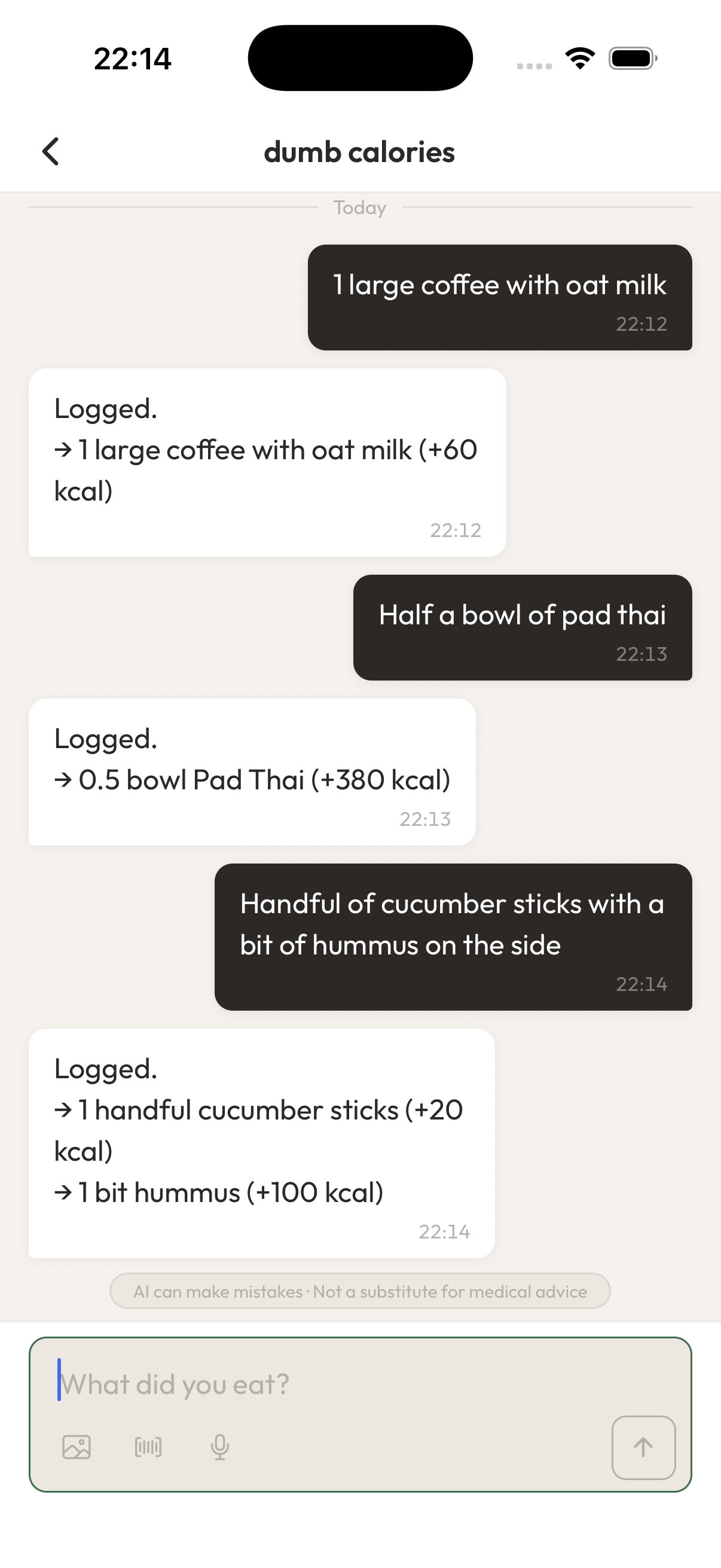
You decide how hard to try. “A burger and fries” gets a rough estimate. “Double cheeseburger, medium fries, no drink” gets a sharper one. And here’s the part nobody selling you a food scale will admit: even the sharp one might be 150 calories off. It doesn’t matter, and the reason it doesn’t matter is the whole point.
“Roughly right” beats a blank evening, every time
You are never going to know the true calorie count of a restaurant meal. The kitchen doesn’t weigh your portion either; it isn’t hiding the number, it genuinely doesn’t have it. So the perfect figure you keep holding out for doesn’t exist, and holding out for it just means you log nothing at all.
made for the menu
tell it what you ordered and get the calories back. on iPhone.
A week where every restaurant meal went in “about right” tells you something real: Thursdays run hot, the work lunches are fine, the weekend is where it slides. A week with three blank evenings tells you nothing. Only one of those is a week you can actually do something with.
If the same problem shows up at home, I wrote about tracking without weighing your food, and if it’s time you’re short on rather than labels, calorie tracking for busy professionals is the one to read.
So order what you were going to order anyway. Then take the ten seconds to describe it, before the plate’s cleared and you’ve already forgotten the garlic sauce.