How to log calories by voice
Two eggs are spitting in the pan, a slice of bread is in the toaster, and your phone is face-down on the counter three feet away. To log this breakfast the normal way you’d put down the spatula, wipe your hands, unlock the phone, find the app, and thumb out “2 eggs, toast, black coffee.” Five moves to record a plate that runs a little over 230 calories. You won’t do it. You’ll decide to log it after you eat, and by the time you’ve eaten, the details have already gone soft.
That gap, between the meal and the moment you can actually type it, is where a lot of tracking quietly dies. Not because typing is slow. Because your hands are busy at exactly the moment the food is in front of you.
Why typing loses the meal
Typing needs two free hands, your eyes on a screen, and a pause in whatever you’re doing. Eating almost never hands you all three at once. You’re stirring, or holding a fork, or carrying a coffee onto the train, or mid-sentence with someone across the table. So you defer. “I’ll log it later” is the most expensive sentence in tracking, because later your memory has rewritten the plate: was it one slice of toast or two, was there butter, did you finish the banana or leave half of it on the counter.
An egg is 78 calories and it doesn’t care whether you remember it. Two of them plus a slice of bread is 236, a real number that was sitting right there while you cooked and mostly gone by the time you sat down. The five-minute case for tracking is about how little time logging takes. This is a different problem. Ten seconds of typing is still ten seconds you don’t have when both hands are on a pan.
Just say it
So say it instead. Out loud, to the phone on the counter, while the eggs finish: “Two eggs, a slice of toast, black coffee.” You don’t pick it up, you don’t look at it, you don’t stop cooking. The app takes the audio, works out the three separate foods, and drops the entry into your day with calories and macros already attached. The coffee, black, is basically nothing; the eggs and the toast do all the work.
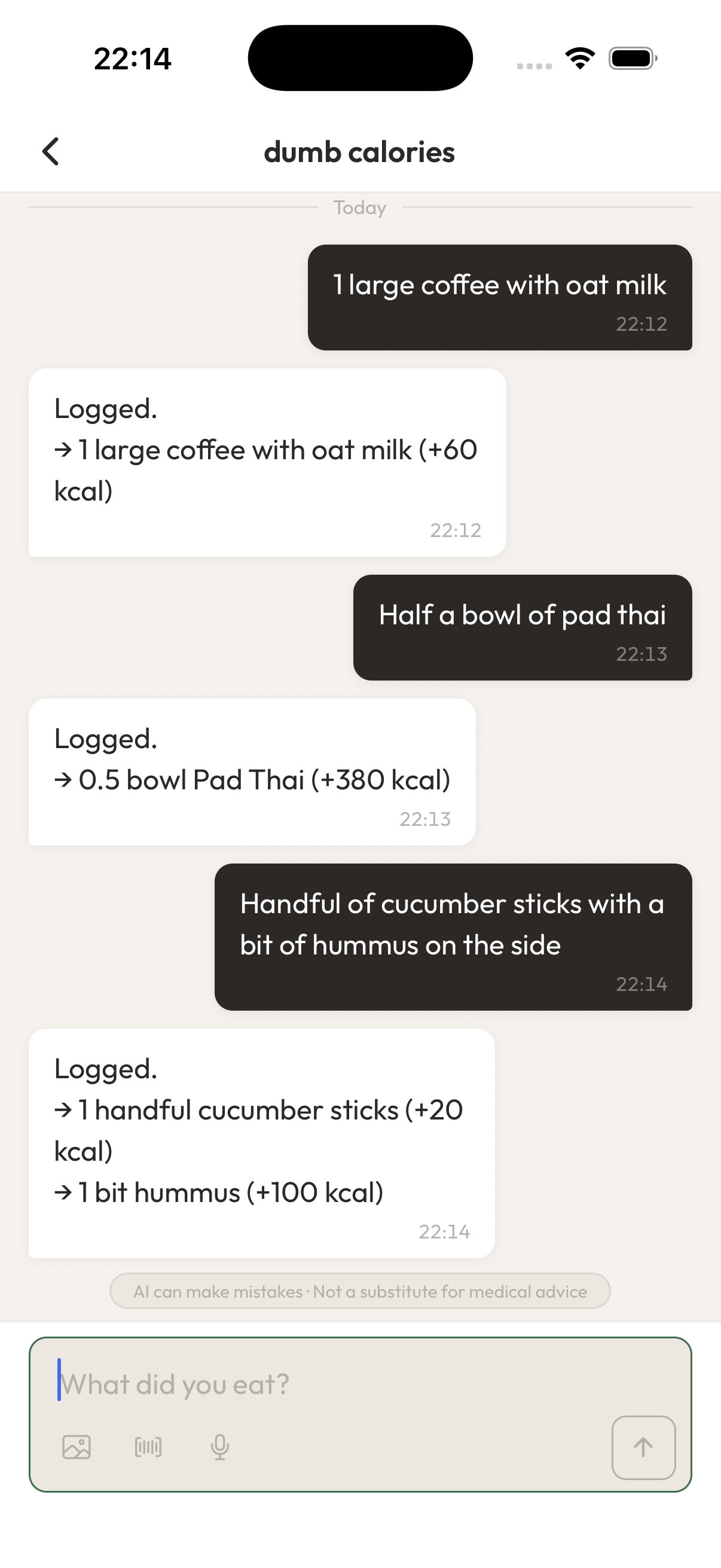
Talking is faster than typing, but speed was never the interesting part. What matters is that talking doesn’t make you stop. You can log a döner while you’re still holding it, walking home with one earbud in. You can log a meal in the ten seconds you’re actually eating it, which is the only ten seconds you remember it accurately.
hands full? just say it
speak your meal out loud and get the calories back. no typing, no stopping. on iPhone.
Where it doesn’t work, and that’s fine
I’m not going to tell you to dictate your lunch across a quiet open-plan office. You’ll feel like a lunatic, and you’ll be right. Voice is for the private, hands-busy moments: your own kitchen, the car, the walk home, the gym floor between sets. In a loud restaurant it’ll hear “quinoa” as something else and you’ll fix it by hand anyway, at which point you might as well have typed. When you’re sitting still with two free hands, type. Nobody is taking the keyboard away.
What voice gives you is a way to log the meals typing can’t reach, and those turn out to be most of the meals you eat. If it’s raw minutes you’re worried about, the five-minute version covers that; if you want to know how a spoken sentence becomes a calorie count, here’s how the AI actually reads it.
So next time the pan’s going and the phone is face-down on the counter, leave it there. Just tell it what’s in the pan.